Townhome vs. Condo in Prince William County: Which Is Right for You?

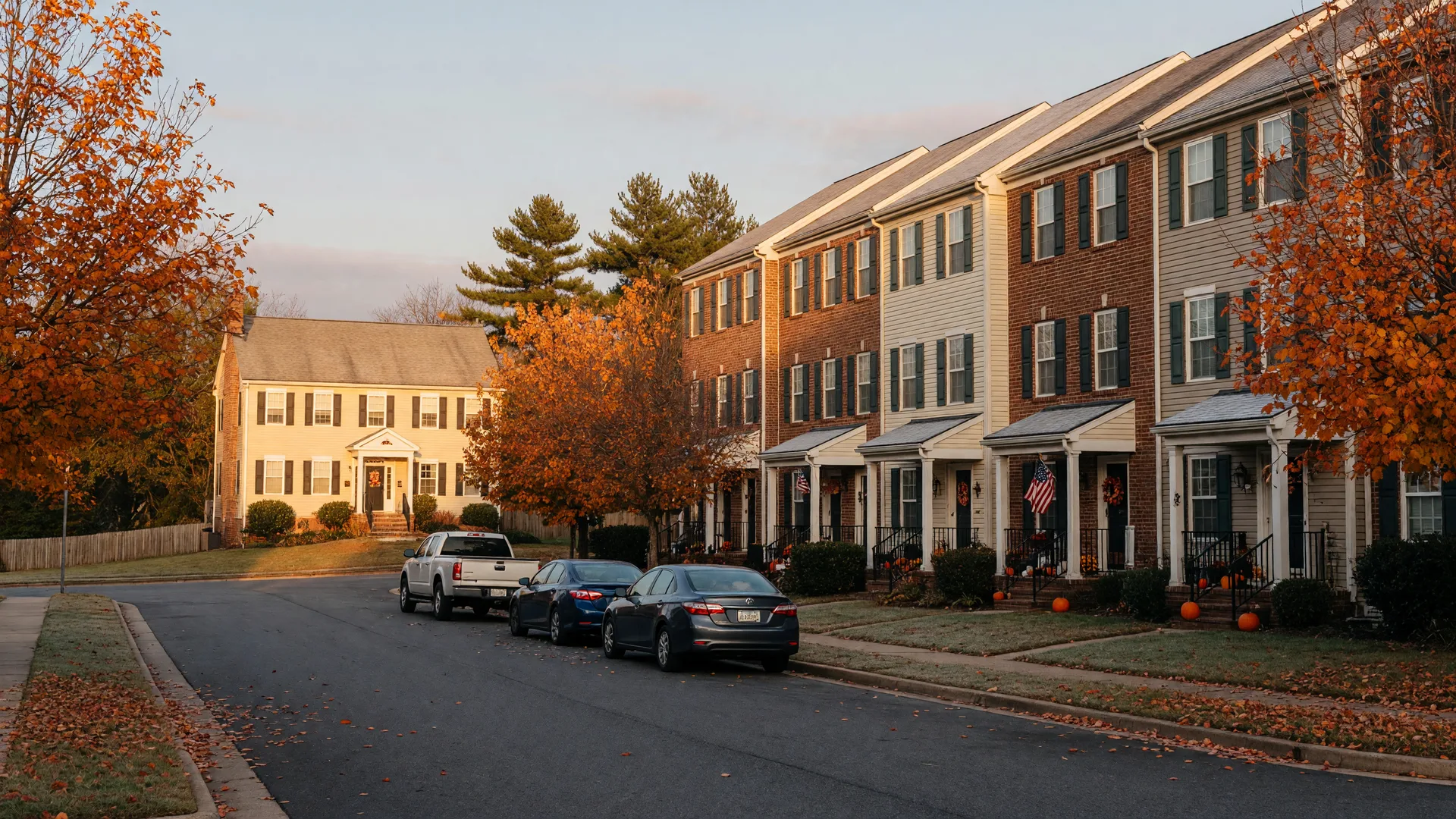
The short answer is that a townhome and a condo are different kinds of ownership, not different kinds of buildings. In Prince William County, most townhomes are fee-simple homes: you own the land, the structure, and the roof over your head, and you pay an HOA fee for shared common areas. A condo is an individual unit within a multi-unit building where you own your interior space plus an undivided share of the common elements, and the condo association owns and maintains the building shell. That single distinction drives everything else, from your monthly fee to your insurance to how much home your money buys here.
What You Actually Own: Fee-Simple vs. Condominium
Start with the legal structure, because it decides who pays for what. Under the Virginia Condominium Act, when you buy a condo you own the interior airspace of your unit, roughly everything inside the walls, plus an undivided fractional interest in the common elements: the land, exterior walls, roof, and building systems. The condo association owns and maintains that building shell, which is why condo fees fund a master insurance policy and exterior upkeep.
Most Prince William County townhomes, by contrast, are governed by the Virginia Property Owners' Association Act as fee-simple homes on their own recorded lots. You own the land, the structure, and the roof over your unit, and you share use of community amenities like parks, pools, and roads through an HOA. One important nuance: some townhomes in Virginia are legally structured as condos, so a townhome-style building can still carry a condo declaration. Always check the community's governing documents before you assume which ownership structure applies. Your agent and a careful read of the resale certificate settle it quickly.
The Fee Story: HOA Dues vs. Condo Fees
The monthly cost is where most buyers feel the difference. Condo association fees tend to run higher because they cover the master insurance policy on the building, exterior and roof maintenance, and the association's reserve fund. Townhome HOA fees usually cover shared common areas and amenities, with the owner responsible for the building shell, though many Virginia townhome declarations also put roofing and exterior maintenance on the association, so fee levels vary by community.
To put numbers on it: in Northern Virginia, townhome HOA fees commonly land between about $150 and $380 a month, while garden-style condos in Manassas might run $250 to $350 and amenity-heavy buildings in Arlington or Reston can climb to $500, $800, or more. Prince William County's median monthly HOA or condo fee is around $310, with most communities falling somewhere between $200 and $413. Lake Ridge, one of the county's largest planned communities, charges its association dues quarterly, roughly $50 to $90 a month depending on your street, and some townhome and condo sections add a separate sub-association fee on top. The exact number for any community lives in its resale certificate, so verify it before you write an offer.
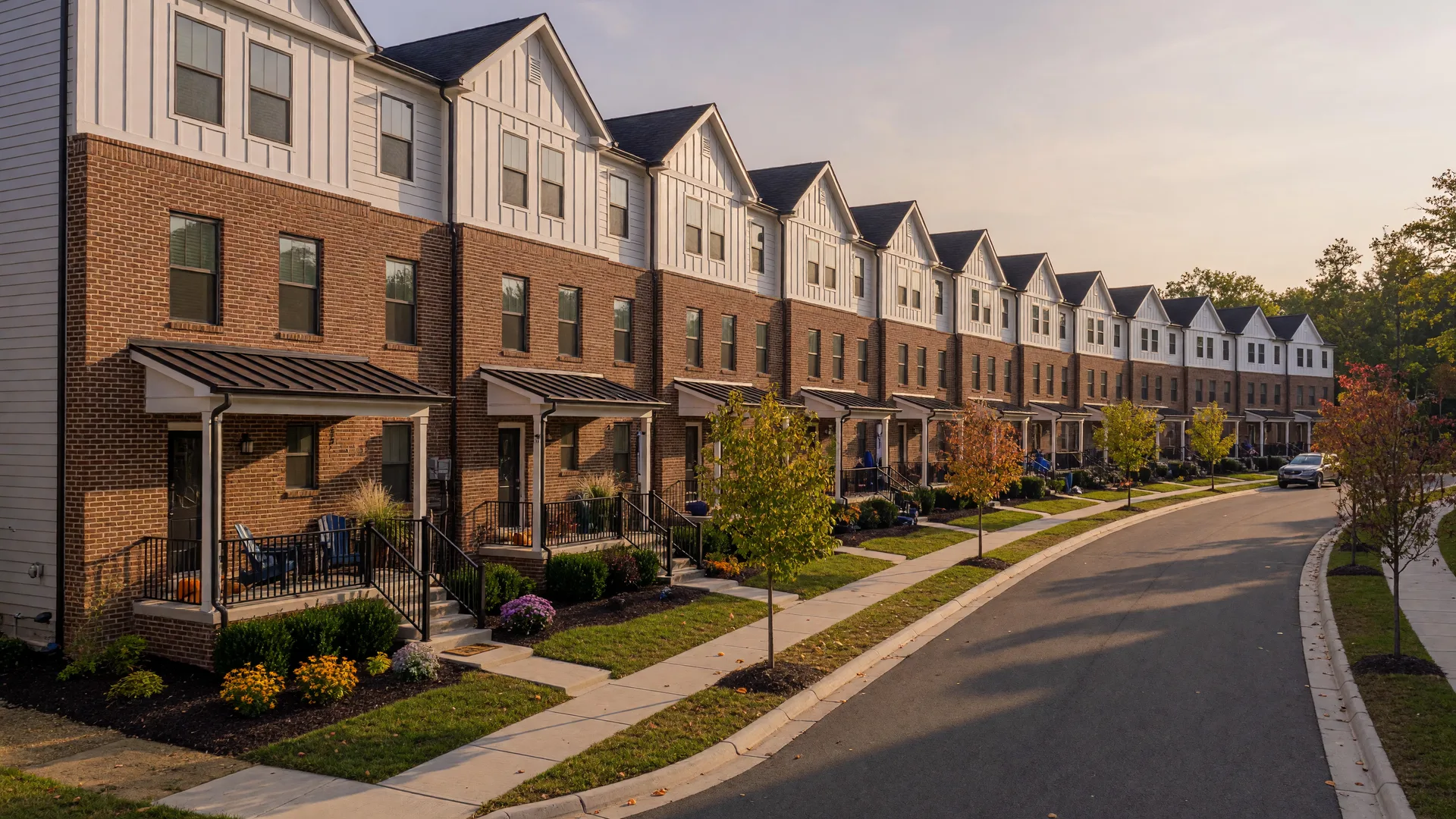
Newer townhome communities in Manassas and Woodbridge charge roughly $150 to $300 a month in HOA dues.
What Your Money Buys in Prince William County
Price is where the two product types split most clearly in this market. Local market reports put Prince William County's median townhome price roughly in the $410,000 to $480,000 range in 2026, while the county's median condo price runs about $280,000 to $320,000. In one line: a condo is generally the most affordable entry point into homeownership in the county, and a townhome trades more space, a yard, and fee-simple ownership for a meaningfully higher purchase price and often a higher fee.
The range is wide depending on where you look. In Woodbridge, new-construction communities like Neabsco Commons offer modern condo-townhomes in the low to mid-$300s with fees near $300 a month, while Beacon Park townhomes start around $580,000. In Manassas, newer townhome communities like Ashberry start in the $480,000s and Lomond Village condos land in the mid-$400,000s. For context, the county's overall median sale price sits near $599,000, so both townhomes and condos are the affordable side of a market where single-family homes routinely clear $600,000. For first-time buyers and downsizers alike, that value is why these property types are so popular here.

From Lake Ridge to Montclair, community amenities are a big part of what your monthly fee pays for.
Which One Fits Your Life?
Ask yourself what a typical week looks like. A townhome usually means stairs, a private entrance, some outdoor space, and often a garage or reserved parking, which suits growing families, pet owners, and anyone who wants the feel of a house without the price tag of a detached one. A condo often means single-level or minimal living and amenities like a pool, gym, or clubhouse maintained by the association, which suits first-time buyers, busy professionals, and retirees who want less to worry about.
Maintenance is the second question. In a fee-simple townhome, the roof, siding, and anything else on your lot are your responsibility unless the declaration says otherwise. In a condo, the association handles the exterior and the building systems, and your fee funds it. A townhome gives you more control and more to own; a condo gives you less upkeep in exchange for a higher ongoing fee and shared rules. If the idea of never booking a roofer again sounds appealing, a condo may be the better fit. If you want to paint your front door and own the ground under your feet, a townhome likely is.
Financing and the Fine Print to Verify
Before you commit to either, verify the financing details. FHA condo rules tightened in 2026, with the old Limited Review shortcut retired, so condo projects with more than ten units must clear the full FHA review process. If you plan to use an FHA loan on a condo, confirm the project's approval status early with your lender, because it can take weeks and can scuttle a closing if discovered late. Townhomes structured as fee-simple homes typically face fewer approval hurdles.
Finally, read the resale certificate and the association's financials before you sign. Look for the current fee, how often it has increased, the health of the reserve fund, any pending special assessment, and what the master insurance covers. A low monthly fee with an underfunded reserve can mean a large special assessment a year later, while a higher fee in a well-run community can be the best money you spend. These documents are the difference between knowing what you are buying and being surprised by it, and they are the kind of detail I walk my clients through on every Prince William County purchase.
Whether you land on a townhome or a condo, the goal is the same: a home that fits your budget, your lifestyle, and your next chapter. If you are comparing townhomes and condos in Prince William County, let us talk through the numbers together. I will help you weigh the fees, the ownership structure, and the neighborhoods, and I will make sure you understand every detail before you commit, the way I would for my own family.