Understanding HOA Fees in Northern Virginia: What Every Buyer Should Know


If you are buying a home in Northern Virginia, there is a very good chance it comes with a homeowners association — and a monthly fee that comes with it. Whether you are looking at a townhome in Gainesville, a single-family home in Ashburn, or a condo in Arlington, HOA fees are a fact of life across the NOVA landscape. And yet, many buyers sign their contracts without fully understanding what those fees cover, how much they can increase, or what financial surprises might be hiding in the fine print.
After more than 25 years helping buyers navigate this market, I can tell you that HOA fees are one of the most misunderstood elements of a home purchase in Northern Virginia. They can range from under $100 a month to over $400 — and in condo buildings with full amenities, they can climb past $800. Understanding what you are paying for, and what questions to ask before you commit, can save you thousands of dollars and a lot of headaches down the road.
What Do HOA Fees Actually Cover?
HOA fees vary dramatically from one community to the next, but they generally fund the shared infrastructure and services that keep your neighborhood maintained and functional. Here is what your monthly dues typically cover in a Northern Virginia HOA community:
- Exterior maintenance: Siding, roofing (especially for townhomes and condos), painting, and general building upkeep
- Landscaping and grounds: Front-yard lawn care, common-area landscaping, irrigation systems, and seasonal planting
- Snow removal: Sidewalks, driveways, and common-area plowing during Northern Virginia winters
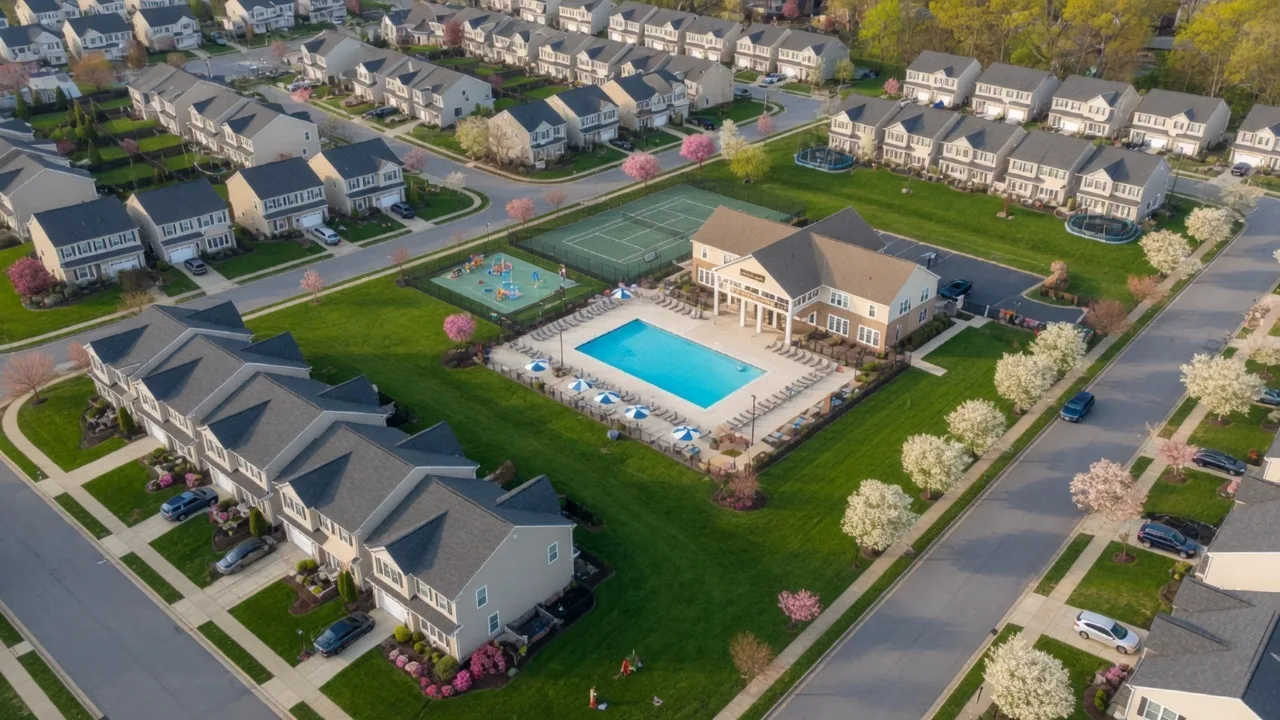
- Community amenities: Pools, fitness centers, clubhouses, tot lots, tennis courts, and walking trails
- Common-area utilities: Lighting for streets and pathways, water for irrigation, and sometimes trash collection
- Master insurance: The HOA's master insurance policy covers the exterior structure and common areas (especially important in condo and townhome communities)
- Reserve funds: Money set aside for future major repairs — roof replacement, parking lot resurfacing, pool renovations, and other capital projects
The key thing to understand is that the HOA covers the shared elements of your community. You are still responsible for everything inside your unit or home — appliances, HVAC, interior repairs, personal property insurance, and property taxes. Many first-time buyers mistakenly believe their HOA fee is an all-inclusive payment. It is not.
How Much Should You Expect to Pay?
HOA fees in Northern Virginia vary widely depending on property type, amenities, and the age of the community. Here is a general breakdown by county and property type:

- Prince William County townhomes: Typically $150 to $380 per month. Communities like Potomac Club in Woodbridge charge around $380, covering pool access, lawn care, snow removal, and exterior maintenance. More basic communities in Manassas or Bristow may run $150 to $220.
- Fairfax County townhomes: Generally $200 to $400 per month, with newer communities in Centreville, Chantilly, and Burke on the higher end due to premium amenities.
- Loudoun County single-family homes: Often $100 to $250 per month. Leesburg and Ashburn HOA communities tend to cover common-area landscaping, community pools, and trail maintenance. Some master-planned communities like Brambleton or Broadlands carry higher fees in exchange for resort-style amenities.
- Stafford County communities: Typically $80 to $200 per month for single-family home HOAs, making Stafford one of the more affordable counties for HOA costs in the region.
- Condos across NOVA: The widest range. A modest garden-style condo in Manassas might run $250 to $350, while a high-rise in Arlington or Reston with a doorman, fitness center, and rooftop pool can charge $500 to $1,200 or more.
The median monthly HOA fee in Prince William County sits around $310, which gives you a reasonable benchmark for the region. But the median tells only part of the story — always look at the specific community's fee structure, what it includes, and how it has changed over time.
The Hidden Risk: Special Assessments
If there is one thing every Northern Virginia buyer needs to understand about HOAs, it is this: your monthly fee is not the only cost you might face. HOA boards can levy special assessments — one-time charges to fund major repairs, emergency expenses, or capital improvements that the reserve fund cannot cover.
Special assessments are more common than many buyers realize. When a roof needs replacing, a parking lot cracks, or a pool requires a full renovation, the HOA board can pass a special assessment that splits the cost among all homeowners. In Northern Virginia, these assessments can range from a few thousand dollars to well over $50,000 per unit, depending on the scope of the project and the size of the community.
A well-funded reserve account is your best protection against surprise assessments. When a community maintains healthy reserves — typically at least 70% of the total estimated replacement cost for common elements — it can absorb unexpected expenses without hitting homeowners with a large, sudden bill. Communities with low or depleted reserves are significantly more likely to levy assessments.
Under Virginia law, there is no state-mandated cap on HOA fee increases or assessment amounts. HOA boards have broad authority to raise dues and pass assessments based on the community's governing documents and the Property Owners' Association Act (Va. Code § 55.1-1805). This makes your due diligence before purchase absolutely critical.
How to Read the HOA Resale Certificate
Virginia law requires the seller to obtain a resale certificate from the HOA and provide it to the buyer before closing (Va. Code § 55.1-2309). This document is your window into the financial health of the community, and you should review it carefully — not just skim it. Here is what to look for:
- Current balance sheet and budget: Is the association running a surplus or a deficit? A consistent deficit signals potential future fee increases or assessments.
- Reserve fund status: How much money is in reserves versus what is recommended by the reserve study? A reserve fund below 50% of the recommended amount is a significant red flag.
- Outstanding debts and pending litigation: Is the HOA involved in any lawsuits? Legal disputes — especially construction defect litigation, which has been common in newer NOVA communities — can lead to major assessments down the road.
- Fee history: How much have dues increased over the past three to five years? Frequent or steep increases suggest the community is struggling to keep up with rising costs.
- Any pending or anticipated special assessments: This should be disclosed, but do not hesitate to ask directly if the resale certificate is unclear.
- Rules and restrictions: Does the HOA restrict pets, exterior modifications, rentals, or short-term leases? These rules affect your lifestyle and your investment strategy.
Virginia provides buyers a minimum of three business days to review HOA documents after receiving the resale certificate. In my experience, that window is tight — especially for a thorough review. I always recommend that my clients start the review process the moment we go under contract, and I work with a real estate attorney to flag any concerns in the reserve study, meeting minutes, or governing documents.
HOA vs. Non-HOA: Is It Worth It?
Some buyers specifically seek out non-HOA properties to avoid monthly fees entirely. That is a valid choice, but it comes with trade-offs. Without an HOA, you are fully responsible for your own exterior maintenance, snow removal, and landscaping. There is no community pool, no shared amenities, and no governing body ensuring that your neighbor does not park a broken-down RV on their front lawn for six months.
In Northern Virginia, non-HOA properties are more common in older, established neighborhoods — think ranches and colonials in Manassas from the 1970s and 1980s, or rural properties in Nokesville and Fauquier County. They can offer more freedom and lower monthly costs, but you lose the convenience and consistency that an HOA provides.
The real question is not whether HOA fees are "good" or "bad" — it is whether the value you receive in return justifies the cost. A community that maintains its common areas, keeps its amenities in excellent condition, and runs its finances conservatively is well worth $200 to $300 a month. A poorly managed HOA with depleting reserves and rising fees is a different story entirely.
Questions to Ask Before You Buy Into an HOA
Before you commit to a home in any HOA community, make sure you get clear answers to these questions:
- What are the current monthly dues, and how have they changed over the past five years?
- What percentage of the recommended reserve balance is currently funded?
- Are there any pending or anticipated special assessments?
- Is the association involved in any current or recent litigation?
- What do the monthly dues cover, and what costs remain my responsibility?
- Are there restrictions on rentals, pets, exterior modifications, or home-based businesses?
- When was the last reserve study conducted, and when is the next one scheduled?
- What is the delinquency rate among homeowners — how many owners are behind on their dues?
These questions are not about being adversarial with the HOA — they are about protecting your investment. A well-managed community will have clear answers to every one of these questions, and the resale certificate should provide much of the information you need.
The Bottom Line for NOVA Buyers
HOA fees are a standard part of homeownership across Northern Virginia, and in most communities, they provide genuine value. The key is going in with your eyes open. Understand what you are paying for, review the financials thoroughly, and ask the tough questions before you sign. A few hours of research now can prevent tens of thousands of dollars in surprises later.
If you are thinking about buying a home in Northern Virginia and want help evaluating an HOA community — or you want to compare HOA vs. non-HOA options in your target area — I would love to sit down and walk you through it. Every community has its nuances, and having an experienced local agent in your corner makes all the difference.