What Are the Property Tax Rates in Prince William County? A Home Buyer's Guide

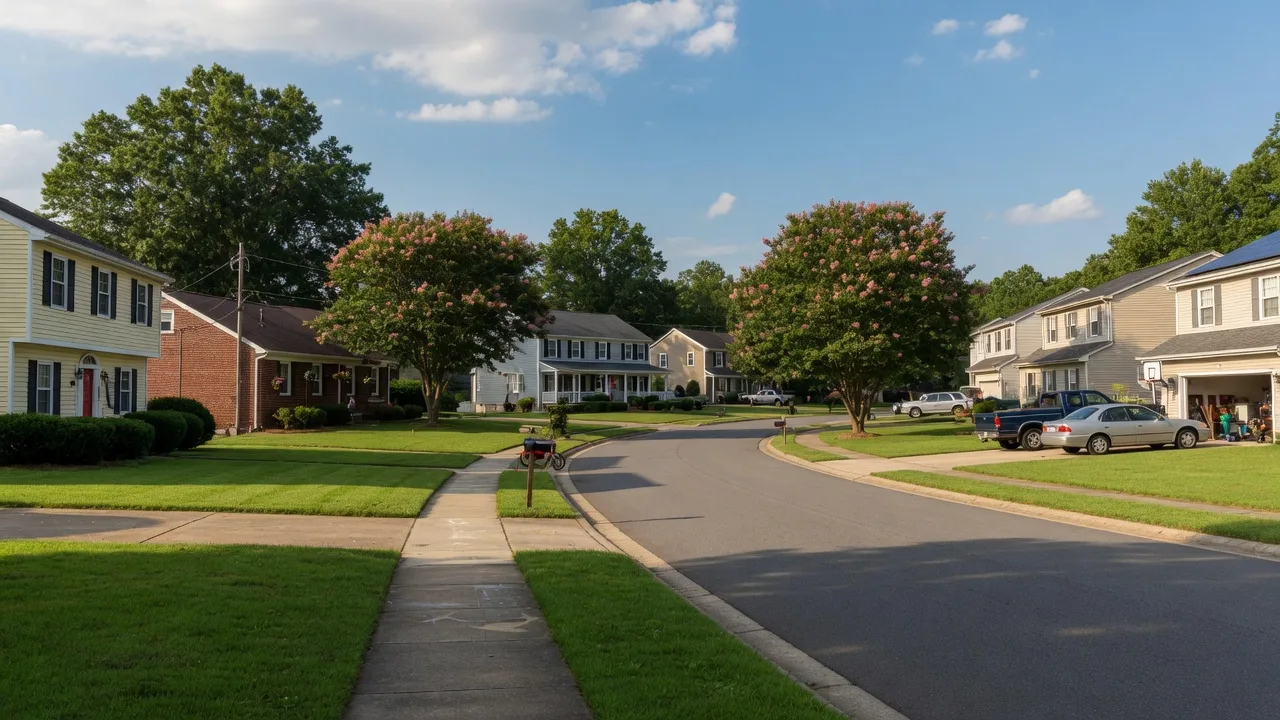
When you start shopping for a home in Northern Virginia, the purchase price gets the headline. But the number that quietly shapes your monthly housing cost every single year you own the home is your property tax bill. And in the NOVA market, where county lines are only a few miles apart but tax rates can differ by hundreds — even thousands — of dollars annually, understanding the property tax landscape is not a footnote. It is a central piece of the buying decision.
In this guide, I will break down the current FY2026 real property tax rates across Prince William County and its neighboring jurisdictions — Fairfax, Loudoun, and Stafford — explain how assessments work, highlight available tax relief programs, and share what I have learned from helping hundreds of buyers factor taxes into their home-buying budgets.
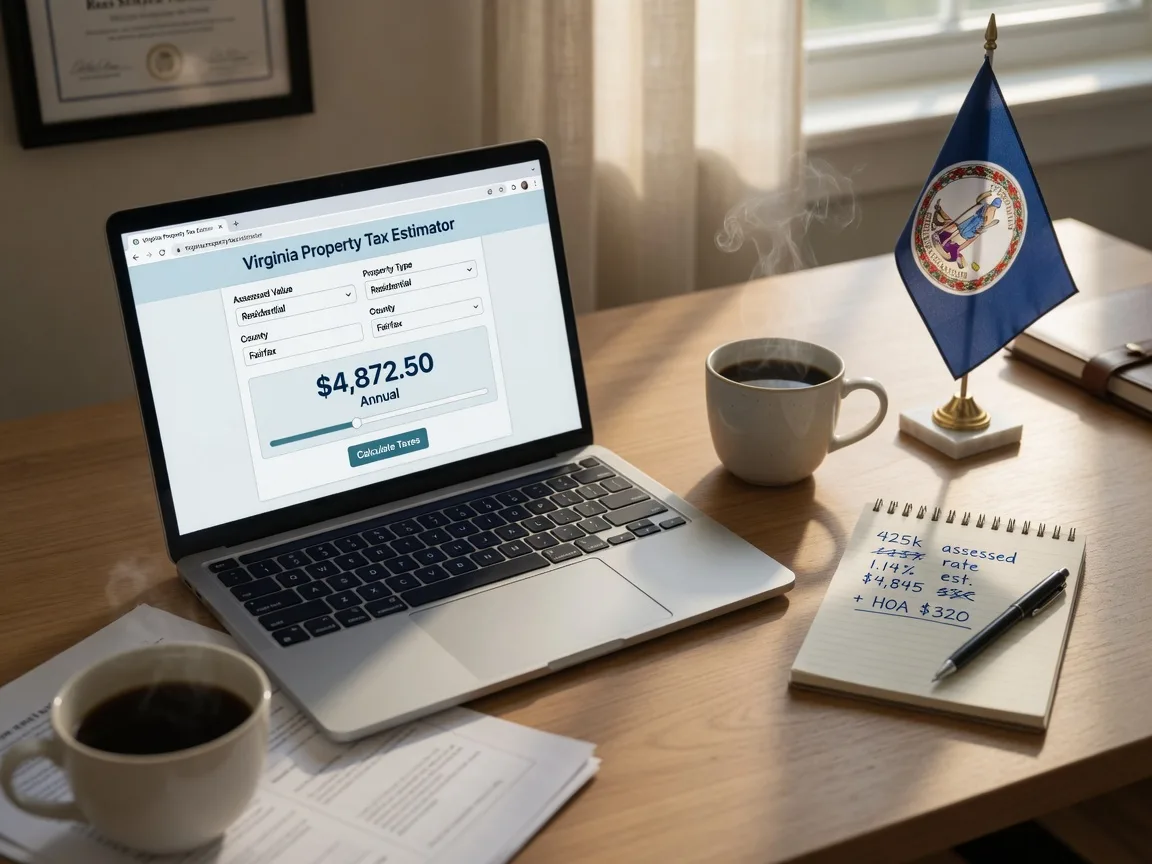
Understanding property taxes before you buy helps avoid surprises after closing. A few percentage points can mean thousands of dollars each year.
Prince William County vs. Fairfax, Loudoun, and Stafford: The Rate Comparison
For Fiscal Year 2026 (which began July 1, 2025), the real property tax rates across the four jurisdictions most relevant to Prince William County home buyers break down as follows, per $100 of assessed value:
| County | Tax Rate (per $100) | Annual Tax on $555K Home |
|---|---|---|
| Prince William County | $0.9805 | $5,442 |
| Fairfax County | $1.1225 | $6,230 |
| Loudoun County | $0.805 | $4,468 |
| Stafford County | $0.9236 | $5,126 |
Source: County Tax Tools, Prince William County FY2026 Adopted Budget, Loudoun County FY2026 Budget, Stafford County FY2026 Budget. Combined rates include any applicable fire/rescue levies and special district charges. Prince William County's combined rate of $0.9805 includes a base rate of $0.906, a Fire & Rescue levy of $0.072, and a Mosquito & Forest Pest Management levy of $0.0025.
Prince William County's combined rate of $0.9805 lands in the middle of the pack — roughly 13 percent higher than Loudoun's rate of $0.805, about 6 percent higher than Stafford's $0.9236, and about 13 percent lower than Fairfax County's $1.1225. On a home assessed at the Prince William County median of $555,000, the difference between PWC and Fairfax County amounts to roughly $788 per year — or about $65 a month. Compared to Loudoun County, the PWC homeowner pays about $974 more per year ($81 a month). These gaps are meaningful, but they need to be weighed against the other factors that make each community unique: commute distance, school quality, home prices, and lifestyle fit.
One nuance worth understanding: Prince William County's rate includes a Fire and Rescue levy of $0.072 and a Mosquito and Forest Pest Management levy of $0.0025. Fairfax County's rate is also a combined figure that includes its own special levies. When you see a rate quoted online, always confirm whether it is the base rate or the combined rate, because the gap between the two can be significant.
How Property Assessments Work in Prince William County
Virginia is not a "truth in taxation" state — meaning assessed values can rise with the market, and property tax bills can increase even if the tax rate stays the same. This is an important concept to understand before you buy.
Prince William County has conducted annual property assessments since 1979 — one of only two jurisdictions in Virginia with a continuous annual reassessment program. Assessments are made as of January 1 of each year, and notices are mailed to homeowners each spring, typically by mid-March. If the market value of your home increases, your assessed value follows, which means your tax bill can grow even if the county holds the tax rate steady.
For example, if home values in your neighborhood rise 8 percent in a year and the tax rate stays flat, your tax bill goes up 8 percent. This is not a tax increase in the legislative sense — it is a reflection of rising property values. It is also why I always encourage buyers to look not just at today's tax bill on a property but at the trajectory of assessments in the neighborhood. If a community has seen rapid appreciation, you should plan for a rising tax bill even if the rate itself does not change.
Appealing Your Assessment: A Homeowner's Right
If you believe your property has been over-assessed, Prince William County provides a clear process for challenging the valuation:
- Step 1: Informal Review. Contact the Real Estate Assessments Office at 703-792-6780 and ask to speak with the appraiser assigned to your area. Many issues can be resolved with a phone call by reviewing comparable sales data.
- Step 2: Formal Appeal to the Board of Equalization. If the informal review does not resolve your concern, file an Application for Review of Real Estate Assessment. The deadline is July 1 of the assessment year, and all supporting documentation — comparable sales, photos, repair estimates, or an independent appraisal — must be received by that date.
- Step 3: Board of Equalization Hearing. You will present your case to a panel of eight independent county taxpayers. Under Virginia law, the assessment is presumed correct, so the burden of proof is on you to demonstrate that your property is overvalued.
- Step 4: Circuit Court Appeal. If you are still unsatisfied with the Board's decision, you may appeal to Prince William County Circuit Court.
It is also worth noting that Virginia's homestead exemption provides a small statewide deduction of $500 to $1,500 on your primary residence's assessed value under Virginia Code Section 58.1-3219.5. It will not dramatically reduce your tax bill, but every dollar counts.
Tax Relief Programs That Matter to Homeowners
Prince William County offers several tax relief programs that directly reduce or eliminate property tax obligations for qualifying homeowners. If you fall into any of these categories, make sure you apply:
Elderly and Disabled Tax Relief. Homeowners who are 65 or older as of December 31, or who have a total and permanent disability, may qualify for partial or complete exemption from county real estate taxes, personal property tax on one vehicle, and solid waste fees. Relief amounts are based on gross household income and net worth. Applications must be submitted annually by April 15.
Disabled Veterans Tax Relief. Veterans with a 100 percent service-connected, permanent, and total disability qualify for full real estate tax relief on their primary residence and up to one acre of land, plus an exemption on one vehicle from personal property tax. No income or net worth requirements apply.
Surviving Spouses of Disabled Veterans and KIA. Surviving spouses of qualifying disabled veterans or service members killed in action may also qualify for real estate tax relief and solid waste fee relief, again with no income or net worth requirements.
Rehabilitated Real Estate Tax Exemption. If you purchase a home that needs substantial repair and renovation, the increase in assessed value attributable to the improvements may qualify for a tax exemption for a set period. A $50 non-refundable application fee and building permits are required.
Use Value Assessment Program. Properties used for agricultural, forestal, horticultural, or open space purposes may be assessed at their use value rather than market value. Applications must be filed within 30 days after assessment notices are mailed in early spring.
Prince William County offers the most balanced combination of tax rates, home values, and quality of life in the NOVA region.
Putting It All Together: What This Means for Your Home-Buying Budget
Here is the practical takeaway: when you are comparing a home in Prince William County against a similar-priced property in Fairfax or Loudoun, do not just compare the sticker price. Run the numbers with the tax rate baked in. A house in Fairfax County assessed at $650,000 will generate annual taxes of roughly $7,296 ($650,000 x 0.011225). The same assessment in Prince William County would produce about $6,374 — a difference of $922 a year, or roughly $77 a month. In Loudoun County, the same assessment would be about $5,233 — saving you $1,141 a year compared to Fairfax.
Of course, the purchase price itself varies significantly across these counties. A home that costs $650,000 in Prince William County might command $750,000 or more in Fairfax for a comparable property. The lower purchase price in PWC compounds with the lower tax rate to produce a genuinely more affordable monthly housing cost — and that is before you factor in the excellent schools, community amenities, and growing retail and dining infrastructure across Prince William County.
For buyers who are working with a specific monthly payment target, I recommend that your lender show you the estimated tax and insurance escrow alongside the principal and interest. That total monthly payment is the number that matters, not just the mortgage. And if you are looking at a neighborhood where assessments have been rising sharply year over year, it is worth asking: will my payment still be comfortable two or three years from now?
The Bottom Line
Prince William County occupies a sweet spot in the Northern Virginia property tax landscape. Its combined rate of $0.9805 per $100 of assessed value is the second lowest among the four jurisdictions examined here, well below Fairfax County's $1.1225 and moderately below Stafford's $0.9236 while sitting above Loudoun's $0.805. When you pair that rate with Prince William County's more accessible home prices, the overall value proposition is hard to beat — particularly for growing families, first-time buyers, and anyone who wants to put down roots in a community with strong schools and expanding infrastructure.
Property taxes will change over time. Rates can be adjusted by the Board of County Supervisors, and assessments move with the market. But the fundamental arithmetic of where your dollar goes furthest in Northern Virginia has been consistent for years — and Prince William County remains one of the strongest value stories in the region.
If you would like to talk through what a specific property's tax situation looks like, or if you are ready to start exploring homes in Prince William County, I would welcome the conversation. Give me a call at 571-377-8777, send an email to GG@MoveMeInVa.com, or schedule a free consultation online. I would be glad to help you run the numbers and find the right home for your life and your budget.