Home Improvements That Actually Pay Off When Selling in Northern Virginia

Every seller faces the same question before listing: Should I spend money fixing up my house, or just put it on the market as-is? In Northern Virginia's competitive landscape, the answer is nuanced. Some improvements dramatically increase your final sale price and shorten your time on market. Others eat into your budget and barely move the needle. After 25 years of listing homes across Prince William County, Fairfax, Loudoun, and beyond, I have watched which projects consistently deliver a return — and which ones are better left to the next owner.
The good news: you do not need a full gut renovation to make a meaningful impact on your bottom line. The key is knowing what Northern Virginia buyers actually care about — and investing accordingly.
What the Data Says: The 2025 Cost vs. Value Report
Remodeling Magazine's annual Cost vs. Value report is the gold standard for measuring renovation ROI nationwide, and the 2025 edition (published by Zonda) confirms a consistent pattern: exterior projects dominate. Here are the national leaders, which hold especially true in the DC metro market:
Garage door replacement ranks number one at roughly 268% ROI — you spend around $4,500 and recoup well over $12,000 in perceived value. Steel entry door replacement follows at approximately 216% ROI on a project costing about $2,400. Manufactured stone veneer — the kind of textured accent that gives a home instant architectural presence — returns around 184% on roughly $11,700 in investment. And fiber cement siding replacement delivers about 114% ROI, meaning you recoup your entire cost and then some.
In the DC metro and Northern Virginia region specifically, these exterior numbers often perform even better than national averages. Buyers in communities like Gainesville, Bristow, Haymarket, Centreville, and Chantilly are driving through neighborhoods and making snap judgments from the street. That first impression is worth far more than a trendy interior accent wall.
Curb Appeal: Your Highest-ROI Move
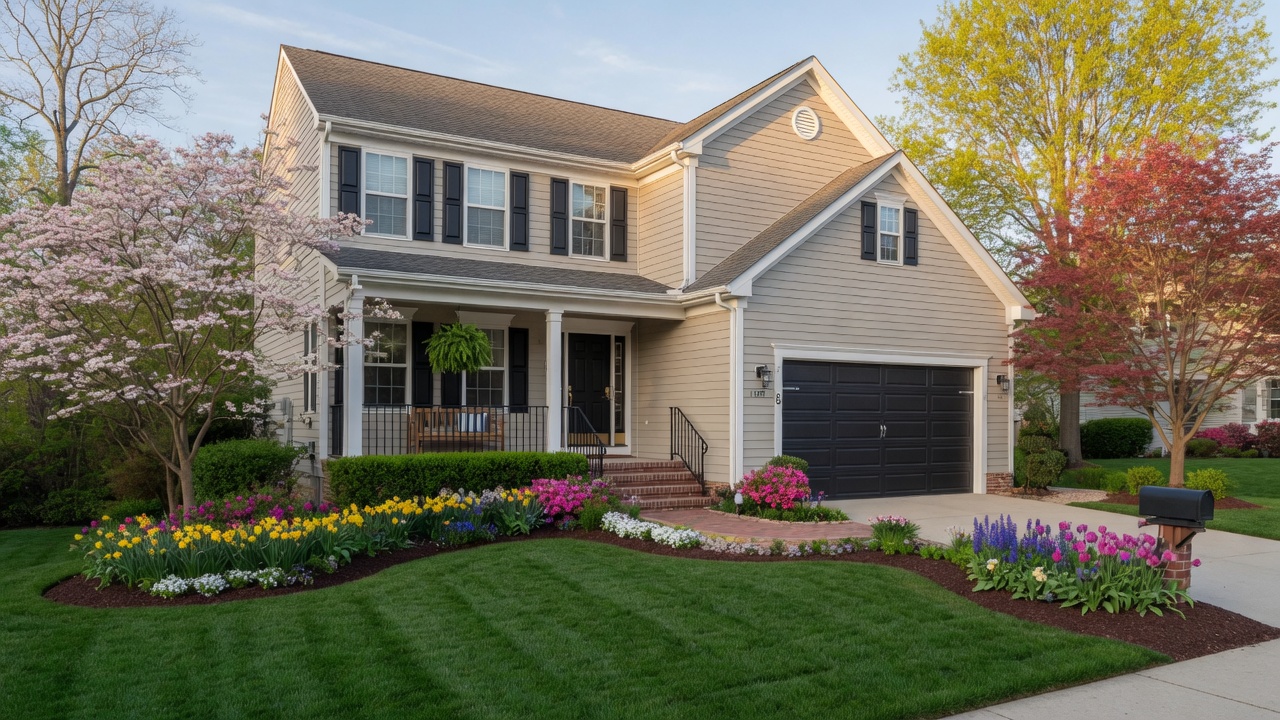
If your home's exterior is dated, worn, or visually inconsistent, this is where your dollars work hardest. In the NOVA market, where buyers are comparing dozens of listings on their phones before they ever schedule a showing, curb appeal is not a nicety — it is your competitive edge.
Here is what I typically recommend for sellers with limited budgets:
- Paint or replace the front door. A fresh color — something that contrasts cleanly with your siding — signals care and attention. This is one of the cheapest upgrades with outsized visual impact.
- Replace the garage door if it is more than 15 years old or showing visible wear. In NOVA subdivisions where the garage faces the street, this single change can transform the entire façade.
- Refresh landscaping. Clean mulch beds, trimmed shrubs, seasonal plantings, and a green lawn cost a few hundred dollars and set the tone for every showing. A composite deck addition can also return 100% or more of its cost in this market.
- Power wash the driveway, walkways, and siding. A half-day project that makes a home look five years newer.
These projects cost anywhere from a few hundred to about $5,000, yet they can shift a buyer's entire perception of your home's condition before they step through the front door.
Kitchens and Bathrooms: Smart Updates vs. Full Remodels
Every seller asks about the kitchen. In Northern Virginia, where median home prices in Prince William County hover in the $500,000–$600,000 range and Fairfax County climbs well above that, a brand-new kitchen remodel can easily run $40,000 to $80,000. The 2025 Cost vs. Value data shows a midrange kitchen remodel recoups roughly 96% nationally — solid, but that still means you are spending $40,000 to net about $38,400 back. When you factor in the six to ten weeks of construction disruption, the math rarely makes sense for a seller on a timeline.
What does make sense is a minor kitchen remodel — refinishing or painting existing cabinets, updating hardware, replacing countertops with quartz or butcher block, installing a new backsplash, and swapping out dated light fixtures. This approach typically costs $8,000 to $15,000 and returns more than 100% of its cost in the NOVA market because it makes the kitchen photograph beautifully for online listings.
For bathrooms, a midrange remodel returns roughly 80% nationally, and the DC region often exceeds that. Again, the strategy is surgical: new vanity, updated faucets, fresh tile surround, modern mirror, and clean grout lines. Skip the $30,000 master bath overhaul. Buyers in Manassas and Manassas Park are looking for clean and functional, not spa-luxury — that tier of buyer is shopping in Great Falls or McLean.
Projects to Think Twice About
Not every upgrade is a smart pre-sale investment. Here are the ones I counsel sellers to approach cautiously:
- Major room additions. Adding square footage is expensive, takes months, and in NOVA you will need county permits and inspections — all of which slow down your timeline. A bathroom addition recoups only about 53% nationally.
- Swimming pools. In our climate, pools are a seasonal luxury. They add maintenance liability and can actually narrow your buyer pool — many families with young children see a pool as a safety concern rather than an amenity.
- Ultra-high-end finishes in mid-range homes. If your home is a $550,000 colonial in Bristow, installing a $25,000 Sub-Zero refrigerator will not push your appraised value higher. The appraiser compares to comps, not aspirational luxury. Spend instead on broad-appeal upgrades that every buyer appreciates.
- Over-personalized renovations. That bold wallpaper, the custom built-in entertainment center, or the dramatic accent tile might reflect your taste — but they can distract buyers from seeing the home's potential.
The Agent's Eye: What I Look For Before We List
When I walk through a seller's home to prepare a listing strategy, I am thinking about three things: what buyers will see in the first photo online, what they will feel in the first three seconds of a showing, and what the home inspector will flag on day one of the contract.
That means I pay attention to the details most sellers overlook: scuffed baseboards, yellowed outlet covers, dripping faucets, sticky doors, and that one hallway light that flickers. These are inexpensive fixes — often under $500 total — that remove subconscious doubts from a buyer's mind. In Northern Virginia's market, where buyers are typically well-educated professionals comparing multiple properties side by side, these small signals of deferred maintenance can be the difference between a full-price offer and a $15,000 repair request after inspection.
I also review every listing through the lens of the MLS photos. Nearly 97% of buyers start their search online. If your kitchen photograph shows outdated cabinets under harsh fluorescent lighting, most buyers will scroll past — no matter how great the rest of the house is. A $200 lighting upgrade and a $40 can of cabinet paint can completely change that first digital impression.
Making All the Right Moves Before You List
The bottom line is this: you do not need to spend a fortune to sell your Northern Virginia home for top dollar. You need to spend strategically. Focus on curb appeal, cosmetic refreshes, and high-ROI exterior projects. Save the major renovations for homes you plan to live in for years — not ones you are about to hand off to someone else.
If you are thinking about selling and wondering where your dollars will make the biggest difference, I would love to walk through your home with you. I will give you an honest, no-pressure assessment of what is worth doing, what to skip, and how to position your home for the strongest possible return in today's market.